This year I chose to only attend the Festival of Cheeses at the American Cheese Society Conference in Montreal. I went with daughter Meg, the cheesemonger, who attended the full Conference.
The Festival was beautiful and thrilling, as always. There were more than 1600 varieties of American-made cheeses on display and available for tasting. Wine, beer, and cider flowed too. It is an experience no cheese lover, or potential cheese lover, should miss if the opportunity presents itself...and it may! Next year the Conference will be in Raleigh, delightfully nearby for us Southerners. Check out the photos and think about next August....
Showing posts with label CHEESE. Show all posts
Sunday, August 21, 2011
The American Cheese Society Conference
Saturday, August 20, 2011
A Fiftieth Anniversary Cheese
The title of this post may be misleading; this is not a 50-year old cheese, or a cheese produced in recognition of the 50th anniversary of a cheese factory. This one is a 10 pound gouda-style cheese made in November 2010 by our friends and cheesemakers John and Nancy Mims of Cypress Point Creamery in Hawthorne, Florida. In the image above it graces the table of Roscoe and Pat Towne as they host classmates at a cocktail party celebrating the 50th anniversary of the Clifton-Fine Central High School's 1961 graduation.
The cheese and the celebration were enjoyed by all.
Monday, May 9, 2011
Temple Shir Shalom
We had a wonderful crowd at the Temple Shir Shalom Newcomers Club for our talk The Amazing World of American Cheese.
Thanks to everyone who came, was so welcoming, asked so many questions, and bought books too.
Tuesday, April 12, 2011
Mozzarella at Kona Joe's
| Peg, Edie, and Donna review the instructions |
| Not bad-looking curds and whey |
| OMG, it looks like mozzarella! |
Not sure we were able to bring about a revolutionary improvement in the ancient art of cheesemaking, but we had a good time and could count one significant success.
Friday, March 11, 2011
Tastings
| At the Cedar Key Arts Center 3/5/2011 |
Through Cheese to You in Lexington, VA, we got the following:
Capri Goat Cheese from Westfield Farms in Hubbardston, MA
Kunik from Nettle Meadow Farms in Warrensburg, NY
Hudson Valley Camembert from the Old Chatham Sheepherding Co. in Old Chatham, NY
Appalachian from Meadow Creek Dairy in Galax, VA
Vella Dry Jack from the Vella Cheese Co. in Sonoma, CA
Old Quebec Vintage Cheddar from Quebec, Canada, and Lancaster County, PA
Capri Blue Bonnet from Westfield Farms
Grayson also fro Meadow Creek Dairy
The following were graciously provided by the Winter Park Dairy, Winter Park, FL
Florida Tomme
Bleu Sunshine
Black and Bleu
Our other great new Florida artisan cheesemakers at Cypress Point Creamery, Hawthorne, FL provided the following:
Heart of Palm
Magnolia
The final cheese, Humbolt Fog from Cypress Grove Creamery we were able to obtain at a local wine and cheese shop
How did the tastings go? Well, everyone had fun, almost everyone loved almost all the cheeses, and they would like us to do it again. Hmm, whatever could we do for an encore?
Thursday, February 10, 2011
The Grand Finale
Tuesday was the final night of The Amazing Cheese Story, our four-session community education course at Santa Fe College. We decided to devote the entire evening to an expanded tasting, and had 12 cheeses, all of which were made in North America. They were:
Westfield Farms Capri Goat Cheese, a soft, unaged cheese from Massachusetts
Old Chatham Hudson Valley Camembert, a bloomy-rind white mold sheep milk cheese from New York State
![]() |
| Blue Bonnets |
Westfield Farms Capri Blue Bonnents, an unusual cheese, tiny and surface-ripened with blue mold, also from Massachusetts
Cypress Point Creamery Baby Swiss, and Alpine-type cheese from Hawthorne, Florida
Meadow Creek Dairy Appalachian, a tomme-style cheese from Virginia
Winter Park Dairy Florida Tomme, this quite different tomme is from Florida
Halls Farmhouse Cheddar, our own young homemade cheddar-style cheese
Old Quebec Vintage Cheddar, a 3-year old cheddar from Canada
Vella Monterey Dry Jack, a delightful aged version of the familiar and rather bland Monterey Jack
![]() |
| Bleu Sunshine |
Winter Park Dairy Bleu Sunshine, an aged, blue-veined cheese from Florida
Winter Park Dairy Black and Bleu, a version of Bleu Sunshine with added cracked peppercorns
Meadow Creek Dairy Grayson, a pungent washed-rind cheese from Virginia
![]() |
| Residue of a Tasting |
Friday, February 4, 2011
The Amazing Cheese Story, Preparing for Day 4
Tuesday, February 8, will be the final night of The Amazing Cheese Story...our 4-class mini-course at Santa Fe College community Education. Here is a link to my thoughts after the first night of the class. Day 1
It has continued to be great fun to get together with these folks each week. On Day 2, we shared stories from the artisan cheesemakers and the cheesemongers we'd interviewed doing the research for The Summer of a Thousand Cheeses and we tasted four artisan cheeses.
Last week we explored the composition of milk and how it turns into cheese. The milks of different animals, cow, goat, sheep, of course differ from each other in taste and butterfat content, resulting in the cheeses made from their milks differing in taste. What the animals have been eating also makes the cheeses taste different, if artisan processes are used that maintain the qualities and tastes of the original milks. Given those facts, almost all cheeses arrive at their curds-and-whey stage by the same processes and from that point, variations in the processing create the variations we find in the final products. What makes blue cheeses blue and mold-ripened cheeses soft? How they are processed subsequent to the curds-and-whey stage. We talked about that and tasted fromage blanc that Russ and I had made the previous day.
Now we are preparing for the final class. We will taste, taste, taste. Perhaps we will also make some mozzarella. Russ and I are experimenting with mozzarella this afternoon to decide if the timing will work for class, and the product will be worth the class time.
Most fun of all, the cheeses we ordered from our cheesemonger are arriving. Yesterday we received Bleu Sunshine, Black and Bleu, and Tomme from Winter Park Dairy. Today we expect more. When it arrives, I'll post some photos!
It has continued to be great fun to get together with these folks each week. On Day 2, we shared stories from the artisan cheesemakers and the cheesemongers we'd interviewed doing the research for The Summer of a Thousand Cheeses and we tasted four artisan cheeses.
Last week we explored the composition of milk and how it turns into cheese. The milks of different animals, cow, goat, sheep, of course differ from each other in taste and butterfat content, resulting in the cheeses made from their milks differing in taste. What the animals have been eating also makes the cheeses taste different, if artisan processes are used that maintain the qualities and tastes of the original milks. Given those facts, almost all cheeses arrive at their curds-and-whey stage by the same processes and from that point, variations in the processing create the variations we find in the final products. What makes blue cheeses blue and mold-ripened cheeses soft? How they are processed subsequent to the curds-and-whey stage. We talked about that and tasted fromage blanc that Russ and I had made the previous day.
| Fromage Blanc |
Most fun of all, the cheeses we ordered from our cheesemonger are arriving. Yesterday we received Bleu Sunshine, Black and Bleu, and Tomme from Winter Park Dairy. Today we expect more. When it arrives, I'll post some photos!
Wednesday, February 2, 2011
Fromage Blanc
| fromage blanc |
Now we have more fromage blanc, having made another batch as part of the course we are teaching at Santa Fe college. The students got to sample the unflavored product and a spread we made up from a recipe in Ricki's book. Still we find ourselves with more leftover cheese, a pound more or less. How better to use it than another try at enchiladas? We are attaching the recipe we used last time and are encouraging others to try it and build on it. This may not prove to be a new American classic, but may appeal to others like us, who view the kitchen as a kind of laboratory.
Monday, January 24, 2011
What to do with Whey?
![]() |
| whey remaining from cheese curds recipe |
| pozole sintético con suero de la leche |
The recipes linked above are not meant to be prescriptive; we seldom follow them to the letter, and aren't afraid to get creative.
Wednesday, January 19, 2011
The Amazing Cheese Story, Day 1
Last night was our first class in The Amazing Cheese Story at Santa Fe College Community Education. We have a fantastic group of cheese enthusiasts in the class. We talked about the best of times and the worst of times for American cheese. We sampled two artisanal cheddars, a goat milk and a cow milk. And we tried the cheese curds that Russ and I made earlier in the day...not quite ready for prime time, but pretty good. They just didn't have the magic cheese curd squeak. We are eager to try again with better milk. We had to use homogenized because it was all we could get yesterday. Maybe the squeak was pulverized out when it was homogenized.
Monday, January 17, 2011
Good Bacteria versus Bad
Last week at our Local Cheeses, Dairy Farms, and Cheese Lovers presentation at Gainesville’s The Atrium senior community, I was asked a question to which I responded inadequately. It was a very good question, but I had not anticipated it and was unable to give it the full explanation it deserved. So I’ll use this blog post as an opportunity to try to do it right.
The question went something like this: “You said that the good bacteria used in cheesemaking overwhelm and outcompete the bad bacteria. My question is how do they do that?”
So here is what I hope will be a better answer.
1) Oxygen is in short supply in milk. Bacteria in the starter culture (Lactococcus lactis or similar) thrive in the absence of oxygen, a condition that many other bacteria can't tolerate.
2) Starter bacteria are added in overwhelming numbers so they will be far more abundant than other bacteria in the milk.
3) The milk is at a temperature favorable for growth and reproduction of the starter bacteria, but less so for some less desirable bacteria.
4) In growing and reproducing explosively, the huge numbers of starter bacteria rapidly deplete the supply of the sugar lactose, the most available food, converting it to lactic acid.
5) The accumulation of lactic acid makes the milk more acidic, increasing its acidity as much as 100 fold, and making conditions unsuitable for many other bacteria.
6) The good bacteria are helped in their competition by cheesemakers who alter the selective environment by adding salt to the curd, creating conditions that inhibit many bacteria.
There may be even more to it if one were to delve more fully into the microbial environment, but if I could have given the above answer to the questioner, I would have felt much better about having provided a worthy response.
The question went something like this: “You said that the good bacteria used in cheesemaking overwhelm and outcompete the bad bacteria. My question is how do they do that?”
So here is what I hope will be a better answer.
1) Oxygen is in short supply in milk. Bacteria in the starter culture (Lactococcus lactis or similar) thrive in the absence of oxygen, a condition that many other bacteria can't tolerate.
2) Starter bacteria are added in overwhelming numbers so they will be far more abundant than other bacteria in the milk.
3) The milk is at a temperature favorable for growth and reproduction of the starter bacteria, but less so for some less desirable bacteria.
4) In growing and reproducing explosively, the huge numbers of starter bacteria rapidly deplete the supply of the sugar lactose, the most available food, converting it to lactic acid.
5) The accumulation of lactic acid makes the milk more acidic, increasing its acidity as much as 100 fold, and making conditions unsuitable for many other bacteria.
6) The good bacteria are helped in their competition by cheesemakers who alter the selective environment by adding salt to the curd, creating conditions that inhibit many bacteria.
There may be even more to it if one were to delve more fully into the microbial environment, but if I could have given the above answer to the questioner, I would have felt much better about having provided a worthy response.
Saturday, January 15, 2011
Getting Ready
The first session of our community education short course The Amazing Cheese Story is scheduled for next Tuesday. We are having a grand time getting ready for it. Participants will be learning about cheese, sampling cheeses, and making simple cheeses. We hope and trust they will be having as much fun as we expect to have.
Tuesday, January 11, 2011
Turned that Milk into Cheese
We spent a whole day this week playing in the kitchen and making our first farmhouse cheddar in months. We used the non homogenized milk that we describe in the previous post. The pictures tell the story.
| Preparing the thermometer |
| Used a hot plate to avoid having the old canner on the glass-topped range. |
| Setting up the camcorder. Never know when a video might came in handy. |
| Used butter muslin, cheese cloth, rennet, and a mesophilic bacteria culture. all purchased from New England Cheesemaking Supply. |
| Heated the milk. Added the bacteria and rennet. Heating again. |
| Waiting and waiting. Twiddling our thumbs. |
| At last. We cut the curds and separated the whey. |
| Drained most of the whey into the bowl and hung the curds to finish the draining. |
| A wider view of the sophisticated draining apparatus. |
| Cheese is in the cheese press, wrapped in cheese cloth. |
| Twelve houses later the cheese is out of the press being bandaged in cheese cloth for drying. |
| Neatness counts. |
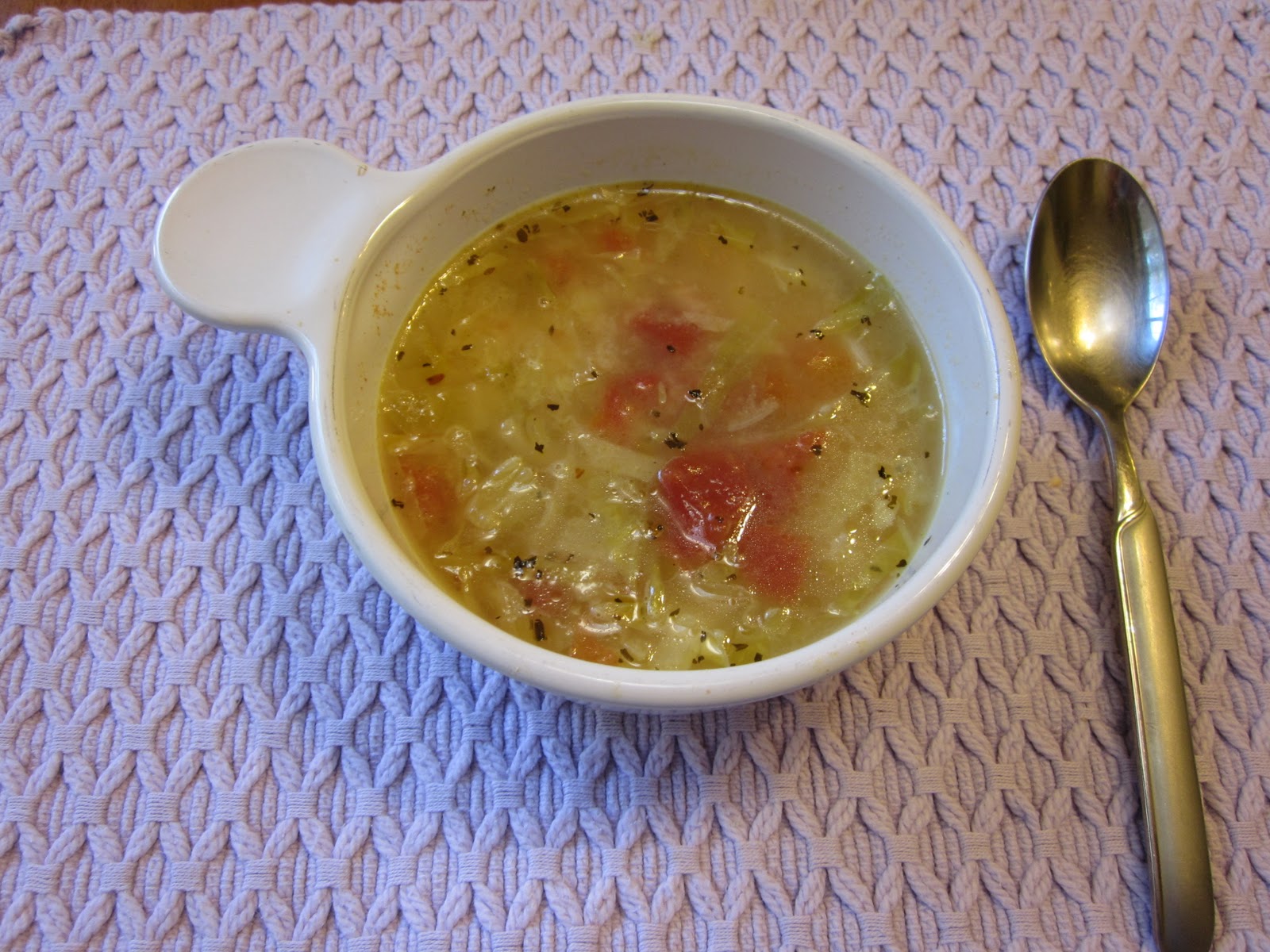
| We substituted whey for broth in a recipe for cabbage soup. Yummy! |
Thursday, January 6, 2011
Cheese Milk
Each time we make cheese at home we manage to do some things a bit better. The things we don't improve we vow we will work on the next time. In this January's cheesemaking, we are for the first time using very good milk for cheeses. When we began a few years ago, we used standard grocery store whole milk. Later we tried organic milk. Learning that non-homogenized milk is essential if one wants to make really good cheese, we sought it out. When we couldn't find it, we followed the advice of a cheesemaker we know. He had been making his own non-homogenized milk by mixing grocery store-bought skim milk with heavy cream. We aren't sure we noticed any differences in our results with different milks, but wanting to remove all possible obstacles to success, we kept looking.
This year we made major progress when we discovered that the Wainwright Dairy of nearby Live Oak, Florida provides pasteurized, non-homogenized milk at our local Ward's Supermarket. So we bought two gallons and used it in making a farmhouse cheddar. The cheesemaking seemed to go very well, but we won't be able to tell you about the final product for a month or more.
Wednesday, December 29, 2010
The Amazing Cheese Story - Sign Up Now!
Based on enthusiastic reactions to our various cheese presentations, beginning in January we will be offering a four-session community education course at Santa Fe College, here in Gainesville. This will allow us to treat more comprehensively all we have done and learned in the past four years and will give expanded opportunities for us to interact with people who share our interest in cheese.
As noted in the brochure above (click to enlarge), we will be covering the history of American cheese as it has progressed from farm to factory and, recently, increasingly back to farmsteads. We'll describe our experiences with all the interesting people who are involved in the new American cheese. Most exciting, we will provide hands-on dabbling so participants can have a live experience with making cheese. Also, we will be engaging in a cheese tasting exercise that is certain to heighten everyone's appreciation for good cheeses.
Wednesday, December 22, 2010
Our Christmas Cheeses
Our friends at Cheese to You have again this year supplied us with a selection of delightful cheeses for the holidays. We intend to give some away as gifts, but may lose our resolve and decide to eat all of them. Of the cheeses shown in this photo, three are American and two are European. Clockwise, beginning on the lower left, they are:
Vella Bear Flag Brand Dry Monterey Jack. An American original from California, this cheese is an unexpected treat that little resembles the bland mass-produced Monterey jack cheeses we find in grocery stores.
3 Comptois Compte. Recognized as one of the world's great cheeses, this French alpine-style cheese is made from raw cow milk and aged for six months. It is a regional specialty and its name and unique character are protected by law.
Old Quebec Reserve Cheddar. This 7-year old version of North America's favorite cheese has an uncommon depth of flavor and the sharp granularity characteristic of fine, long-aged cheeses. If you haven't yet gotten hooked on cheddar, try this one.
Aged Blue Stilton. This blue-veined cheese from England is another regional specialty widely hailed as among the world's great cheeses. Related to and superficially similar to Danish blue, Roquefort, and Gorgonzola, many claim it is superior to all of them.
Friday, December 17, 2010
Cheese for Christmas
We are annually faced with the problem of finding appropriate Christmas gifts for people who seem to have just about everything they want (at least in our price range). Lately we have gotten more creative in choosing unique gifts, but at the same time our friends and family members seem to have gotten more of the things they want. Most recently we have found that cheese is the ideal gift for those hard-to-please people because:
1- Everybody likes cheese (everybody we know, that is).
2- Nobody has a closet full of unused cheeses.
3- Artisan cheeses are truly unique and can be given year after year.
4- Like other great gifts, cheese can be shared with others.
5- If you are lucky the recipient may share some cheese with you.
We are fortunate to know an excellent cheesemonger (Cheese to You) who selects the perfect cheeses for the special people on our lists and ships them everywhere.
Oh, lest we forget, The Summer of a Thousand Cheeses makes a great holiday gift also.
1- Everybody likes cheese (everybody we know, that is).
2- Nobody has a closet full of unused cheeses.
3- Artisan cheeses are truly unique and can be given year after year.
4- Like other great gifts, cheese can be shared with others.
5- If you are lucky the recipient may share some cheese with you.
We are fortunate to know an excellent cheesemonger (Cheese to You) who selects the perfect cheeses for the special people on our lists and ships them everywhere.
Oh, lest we forget, The Summer of a Thousand Cheeses makes a great holiday gift also.
Friday, December 3, 2010
Making Cheese at Home
For the first cheese we made at home, we relied on a homespun recipe in the appendix of a book about cheesemaking history. For subsequent attempts, we purchased a copy of cheesemaking guru Ricki Carroll’s popular and well-regarded Home Cheese Making (see note). Later we bought Margaret Morris’s Cheesemaker’s Manual, thinking it would give us more technical detail. At that point we felt we had more than enough instructions. Nevertheless, the online retailer's computers noted our interest in home cheesemaking and began sending messages announcing releases of still more books of instructions. How many can there be? We wondered.
The answer is 25, based on listings on the Amazon.com website. We do not include a number of bulletins put out by agricultural extension agencies and other governmental organizations, counting in the total only books that by all appearances are commercial publications. The first one listed by Amazon came out in 1974 and in the subsequent 25 years, 10 more were published. In the most recent 11 years 14 more have come out, and five of those were published since the beginning of 2010.
Whether or not the accelerating production of new recipe books for homemade cheeses accurately reflects growth in the activity, it is beyond doubt that resources available to home cheesemakers have never been greater.
Note: Rikki's Home Cheese Making was first published in 1982 and expanded in editions appeared in 1996 and 2002. The cover of the copy (3rd edition) we own indicates that 140,000 copies had been sold.
The answer is 25, based on listings on the Amazon.com website. We do not include a number of bulletins put out by agricultural extension agencies and other governmental organizations, counting in the total only books that by all appearances are commercial publications. The first one listed by Amazon came out in 1974 and in the subsequent 25 years, 10 more were published. In the most recent 11 years 14 more have come out, and five of those were published since the beginning of 2010.
Whether or not the accelerating production of new recipe books for homemade cheeses accurately reflects growth in the activity, it is beyond doubt that resources available to home cheesemakers have never been greater.
Note: Rikki's Home Cheese Making was first published in 1982 and expanded in editions appeared in 1996 and 2002. The cover of the copy (3rd edition) we own indicates that 140,000 copies had been sold.
Subscribe to:
Posts (Atom)